
Concrete services
Concrete Sealing for Utah Winters
Sealing protects concrete from the salt, ice, and freeze-thaw of Cache Valley winters, so the surface does not spall or flake. Poly-Lift can seal a fresh pour or existing concrete any time. Most driveways are ready to drive on 24 hours after sealing.
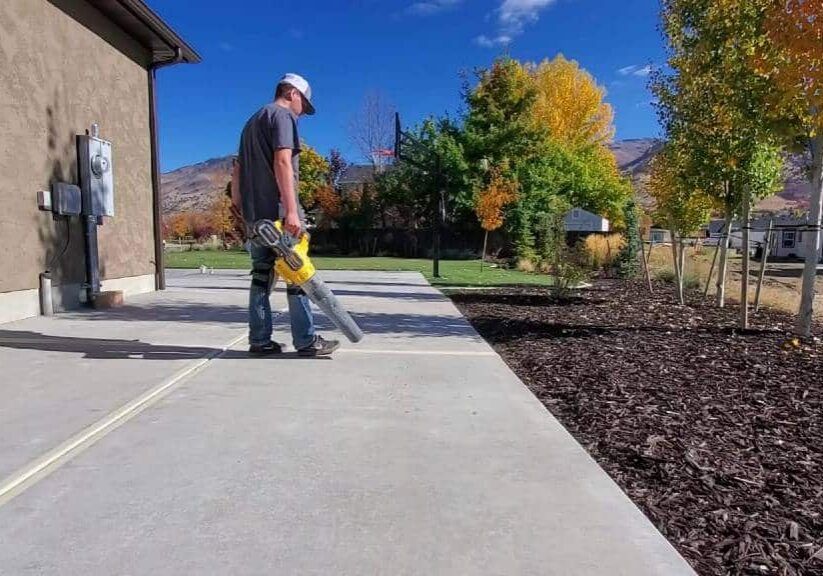
Add years to the life of your concrete
Driveway or patio, sealing is worth it. Concrete is porous, so without a seal, water gets in and works the surface loose until it cracks and flakes.
Most sealers also keep concrete looking new, smoothing the surface and preserving its color.
Built for Cache Valley weather
Our winters are hard on concrete. Moisture soaks into the surface, then frost heave and road salt go to work on it. Sealing keeps that water out so the slab does not spall or crack, and it shrugs off oil and chemicals so the driveway holds up season after season.
How it works
Our sealing process
We grout the seams first so water cannot creep under the slab, then seal the surface.
- 01
Prepare
We clean the driveway and clear the seams of debris, because grout does not bond well over dirt.
- 02
Tape and grout
We tape the seams for a clean line, then run grout into the cracks with a squeeze gun for a uniform finish.
- 03
Flatten and remove
We concave each seam with a spoon so the grout can expand and seal properly, then pull the tape and let it dry.
- 04
Spray and wait
Once the grout is dry we spray the sealant in deliberate, steady strokes. It takes about a day to cure, and then your concrete is protected.
Concrete Sealing FAQ
Is it necessary to seal concrete?
If you live somewhere that freezes, like Cache Valley, we recommend it. Sealing keeps moisture out so freeze-thaw cycles cannot spall or crack the surface.
How long after sealing can I drive on my driveway?
About 24 hours. The sealant needs roughly a day to cure before it takes vehicle traffic.
How long should concrete cure before sealing?
Concrete can be sealed immediately after it is poured, or any time after that.
When should I seal cracks in my concrete?
As soon as you notice them. Sealing cracks early keeps water out before it can work under the slab and make the problem worse.
Can concrete sealers make a surface slippery?
They can, sometimes. We can talk through finish options so your sealed surface still has the traction you need.
Guides
Related services
Cracks in the house itself, or doors that stick? That is usually the foundation settling, and lifting foundations is our main work. See foundation repair
Get a free estimate for concrete sealing
Every job starts with a free on-site look and an exact price before any work begins.
Service area
Serving Cache Valley and Northern Utah
One local crew, based in Logan. We travel across the valley and beyond for concrete lifting and foundation repair.